
Reporting Marks & Capacity Stencils
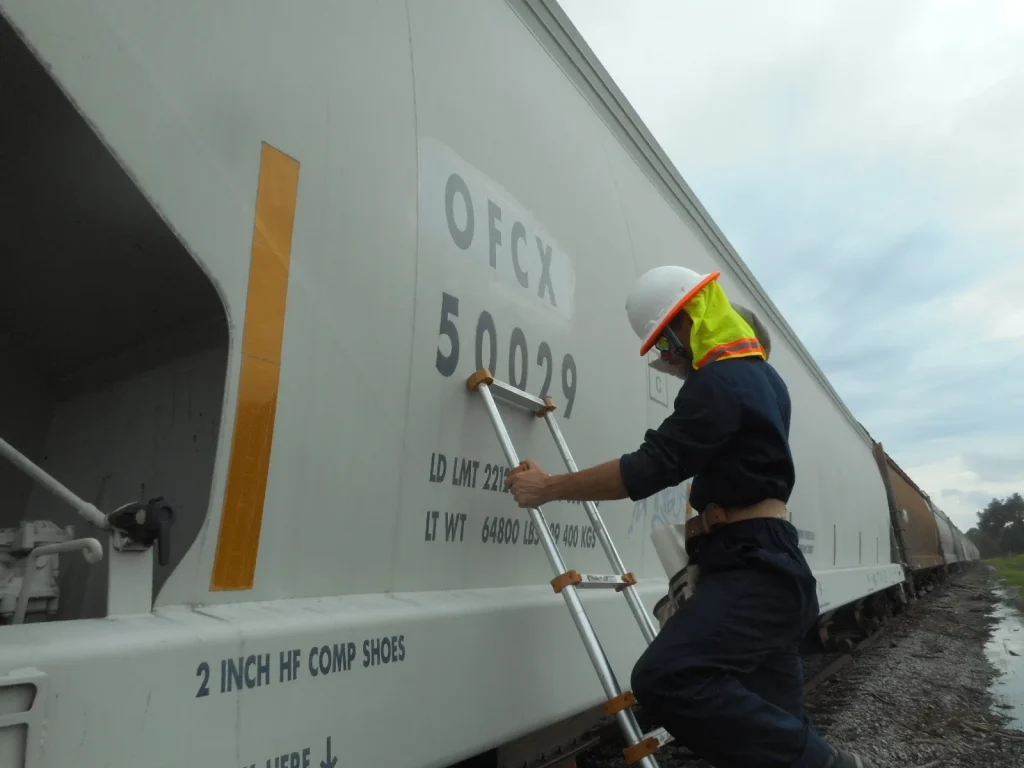
Ownership marks, car numbers, and capacity data stenciled to AAR Interchange Rules specifications. Includes dimensional data, tare weight, and load limits required for compliant operation.
CRMS Services
Reporting marks, HAZMAT placards, UMLER updates, AEI tags, and vinyl decal application. AAR and DOT compliant. One to two week turnaround at fixed facilities or mobile service.
Compliant Markings, Every Time
Railcar markings aren't optional. AAR Interchange Rules require accurate reporting marks, capacity stencils, and maintenance data. DOT regulations mandate proper HAZMAT placarding and labeling. UMLER registration must match physical stenciling. AEI tags enable tracking across the rail network. When any of these are wrong, outdated, or damaged, cars get rejected at interchange or fail inspections.
CRMS provides complete railcar remarking and stenciling services. New car stenciling. Fleet ownership changes requiring new reporting marks. HAZMAT placard updates when commodities change. Damage repair that requires re-stenciling. UMLER registration and updates. AEI tag installation. All work done to AAR and DOT standards with proper documentation.
Complete Marking Services
Ownership marks, car numbers, and capacity data stenciled to AAR Interchange Rules specifications. Includes dimensional data, tare weight, and load limits required for compliant operation.
DOT required hazardous materials placarding and labeling for tank cars, covered hoppers, and other equipment carrying regulated commodities. Updated when commodity changes or placards deteriorate.
Registration in the Universal Machine Language Equipment Register. UMLER data updates when ownership changes, maintenance work alters specifications, or cars are retired. Physical stenciling matched to UMLER records.
Automatic Equipment Identification tags installed per AAR standards. Enables real-time tracking as cars move across the rail network. Required for interchange with most Class I railroads.
Company logos, branding, safety warnings, and custom graphics applied using durable vinyl materials. Resistant to weather, chemicals, and abrasion for long service life.
Complete remarking when fleets change hands. Old ownership marks removed, new reporting marks applied, UMLER updated, and documentation provided for seamless transition.
Re-stenciling after body repairs, repainting, or maintenance work that damages existing markings. Ensures cars remain compliant and audit ready after repair.
Why CRMS
All stenciling and marking work done to AAR Interchange Rules and DOT hazmat regulations. Your cars pass inspection and stay in compliant service.
One to two week turnaround at our fixed facilities. Mobile crews available for onsite service when cars can't be released. Fast response prevents operational delays.
We coordinate UMLER registration, updates, and data verification. Physical stenciling matches UMLER records so cars don't get rejected for data mismatches.
Work orders, UMLER confirmation, and photographs of completed markings. Full audit trail for regulatory compliance and fleet record keeping.
Combine remarking with repair, cleaning, or inspection in one cycle. Cars get multiple services completed at one location without coordinating separate vendors.
CRMS has been managing railcar compliance since 2001. We understand AAR rules, DOT requirements, and how to keep fleets audit ready.
Remarking is required immediately when railcar ownership transfers and reporting marks change. Cars cannot operate in AAR interchange with incorrect ownership marks. The new owner must update physical stenciling and UMLER (Universal Machine Language Equipment Register) records simultaneously.
Typical turnaround is 1 to 2 weeks for remarking work. Cars remain out of service during the process, so timing fleet transitions around operational schedules minimizes revenue disruption.
UMLER is the rail industry's central database containing specifications, ownership, and maintenance records for every freight car in North America. Physical stenciling (reporting marks, capacity data, dimensional information) must match UMLER records exactly for AAR interchange acceptance.
Mismatches between physical markings and UMLER data cause railroads to reject cars at interchange. When ownership changes, repairs alter specifications, or cars are modified, both UMLER registration and physical stenciling must be updated together.
HAZMAT placards must be updated whenever commodity changes to a different DOT hazard class, when existing placards become illegible or damaged, or when cars switch from hazmat to non-hazmat service. DOT regulations require placards to be visible, accurate, and legible at all times.
Faded, damaged, or incorrect placards found during FRA inspection result in violations and cars being pulled from service. Proactive placard maintenance during routine inspections prevents compliance issues and operational delays.
AEI (Automatic Equipment Identification) tags are RFID devices mounted on railcars that transmit car identification data to trackside readers as trains pass. They enable real-time tracking across the rail network without manual visual inspection.
Most Class I railroads require AEI tags for interchange acceptance. Cars without functioning tags may be rejected or subject to manual reporting delays. Tags must be installed per AAR specifications at designated mounting locations and orientations to read correctly.
Railcar remarking takes 1 to 2 weeks at fixed facilities or via mobile crews. Cars must be out of service during remarking—you cannot stencil or apply vinyl graphics while cars are loaded or in transit.
For fleet ownership changes, plan remarking during scheduled maintenance windows or seasonal downtime to minimize operational disruption. Mobile crews can reduce total downtime by working onsite instead of routing cars to remote facilities.
Professional remarking services provide work orders detailing markings applied, UMLER confirmation showing updated registration data, and photographs of completed stenciling showing reporting marks, capacity stencils, HAZMAT placards, and AEI tag installation.
This documentation proves AAR and DOT compliance during audits, supports lease transfer requirements, and maintains fleet records. Without proper documentation, ownership changes may not be legally recognized in AAR interchange systems.
“We acquired 50 tank cars and needed complete remarking with new reporting marks and UMLER updates. CRMS handled the entire fleet in under two weeks. Every car passed AAR inspection on the first try. The documentation was perfect.”
“CRMS coordinated HAZMAT placard updates across our entire fleet when we switched commodities. They understood DOT requirements, handled the physical work, and provided compliance documentation. No cars got rejected at interchange.”
Direct Coordination
Tell us what needs remarked and we'll have options and timeline back to you within 24 hours.
Need to talk first?
Quick 15-minute call to align scope and next steps before final quote.
Book a Discovery Call