AAR Compliance Repairs
Repairs to meet AAR Interchange Rules standards. Structural repairs, safety appliance fixes, and component replacements done to specification so cars pass inspection and stay in compliant service.
CRMS Services
AAR compliance repairs, structural work, brake systems, wheels, trucks, valves, and leak repairs. Fixed facilities and mobile crews. Fast turnaround gets cars back to revenue service.
Get Cars Back to Service Fast
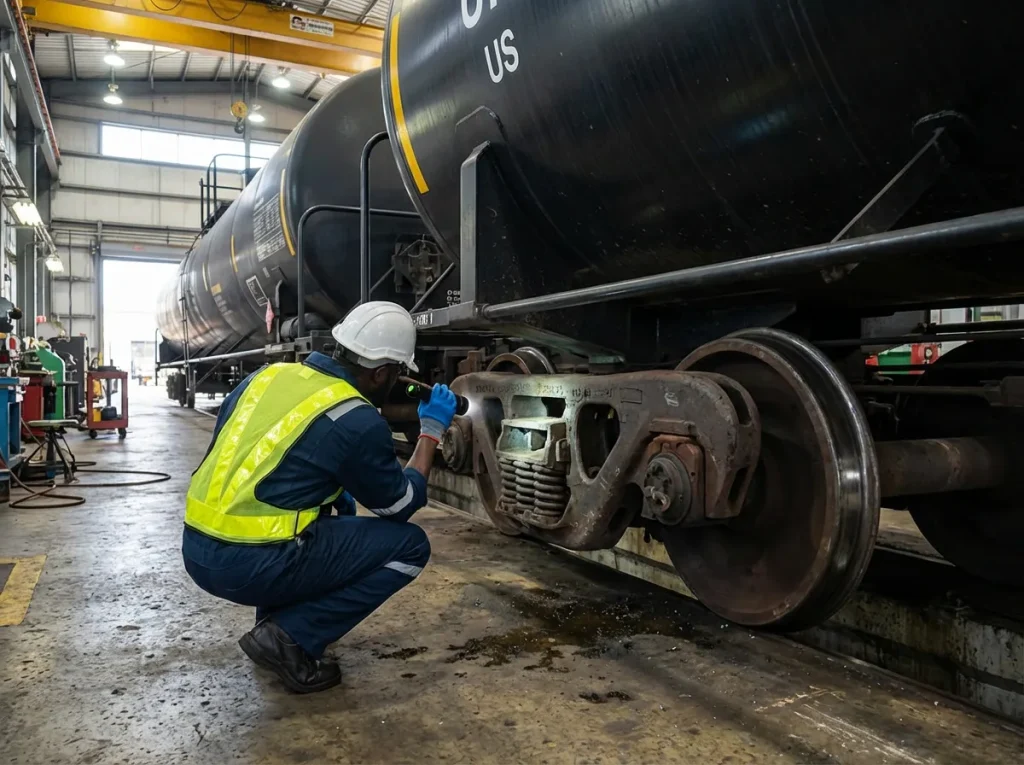
A railcar sitting out of service costs money. Whether it's a failed brake system, structural damage, a leaking valve, or worn wheels and trucks, the faster you get repairs done, the faster the car returns to revenue service. CRMS provides AAR compliant railcar repair at fixed facilities across our network and through mobile crews that deploy directly to customer sites.
We handle everything from minor component repairs to major structural work. COT&S inspections for tank cars. Single car air brake tests. Wheel and truck replacement. Valve and fitting repairs. Leak detection and welding. All work is documented to AAR and DOT standards so cars are compliant, certified, and ready to move when repairs are complete.
Complete Repair Capabilities
Repairs to meet AAR Interchange Rules standards. Structural repairs, safety appliance fixes, and component replacements done to specification so cars pass inspection and stay in compliant service.
Single car air brake tests, brake component replacement, valve repairs, and system troubleshooting. All work documented to FRA and AAR standards with test certifications provided.
Worn wheels, damaged trucks, and bearing failures repaired or replaced. We coordinate with wheel and truck suppliers and perform installations at our facilities.
Leaking valves, damaged fittings, and seal failures fixed quickly to prevent product loss and get cars back to service. Includes pressure testing and certification after repair.
Frame cracks, body damage, and structural issues repaired by certified welders. Includes NDT (non-destructive testing) when required to verify weld integrity and structural soundness.
COT&S (Certificate of Tank Suitability) inspections for tank cars. Periodic inspections to FRA and AAR schedules. Full documentation and certification provided.
Repair crews deploy directly to customer sites for emergency repairs, minor maintenance, and compliance work. Eliminates the need to move cars offsite and keeps fleets operating.
Why CRMS
Repair capacity at strategic locations across our network plus mobile crews that deploy to customer sites. Your cars get fixed where they are, not miles off corridor at a distant shop.
Minor repairs often completed within days. Structural and major work averages 14 days at our fixed facilities. Mobile crews can respond immediately for emergency situations.
All work documented to AAR and DOT standards. Inspection certificates, test reports, and repair records provided so cars are audit ready and regulatory compliant.
MRU crews bring tools, parts, and expertise directly to your facility. Cars don't leave your site, switching costs are eliminated, and repairs happen on your timeline.
Combine repair with cleaning, inspection, and storage in one cycle. One vendor, one location, faster total turnaround than coordinating multiple service providers.
CRMS has been managing railcar maintenance and repair since 2001. We understand fleet economics, regulatory requirements, and how to keep operations moving.
Repair makes sense when repair cost is under 50% of the car's post-repair market value AND the car has 10+ years of service life remaining. Scrap when repair costs exceed 60% of value or when the car has fewer than 5 years of expected life.
Consider regulatory compliance too. If a car can't meet current DOT or AAR standards even after repair (like pre-DOT-117 tank cars restricted from certain commodities), scrapping often delivers better economics than investing in non-compliant equipment.
AAR Interchange Rules require structural integrity repairs, safety appliance compliance, functional brake systems, proper wheels and trucks, and valid inspection certifications. Tank cars specifically need COT\&S (Certificate of Tank Suitability) inspections every 2 to 10 years depending on commodity and car design.
Non-compliant cars are rejected at interchange. Required repairs include frame cracks, damaged safety appliances, failed brake components, worn wheels exceeding AAR limits, and any structural issues flagged during inspection.
Brake system repairs range from $2,000 to $8,000 per car depending on components replaced. Single car air brake tests with minor adjustments cost $500 to $1,500. Full brake valve replacement runs $3,000 to $5,000. Complete brake system overhauls with multiple component replacements reach $6,000 to $8,000.
Costs include parts, labor, testing, and certification documentation. Mobile repair carries a 20% to 40% premium but eliminates freight and switching expenses that often exceed $1,000 per car.
Yes. Mobile repair crews perform brake system repairs, valve replacements, leak repairs, minor welding, and safety appliance fixes onsite. Crews bring tools, parts, and certified welders directly to customer facilities for emergency response.
Mobile repairs work for issues that don't require heavy lifting equipment or specialized testing machinery. Major structural repairs, truck replacement, and extensive welding requiring overhead cranes still need fixed facility access.
COT\&S (Certificate of Tank Suitability) is a DOT-required inspection verifying tank car integrity for continued hazmat service. It's not a repair—it's an inspection that may identify needed repairs. COT\&S intervals range from 2 to 10 years based on car design and commodity.
General repair addresses specific mechanical or structural failures (brake systems, valves, structural damage). Repairs restore compliance. COT\&S inspection determines if the car remains fit for regulated service. Failed COT\&S requires repairs before the car can return to hazmat service.
Professional mobile repair crews provide work orders detailing repairs performed, test certificates for brake systems and pressure tests, welder certifications and welding procedures for structural work, inspection reports documenting pre- and post-repair condition, and parts invoices with component specifications.
This documentation proves regulatory compliance during FRA audits, satisfies lease return requirements, and maintains fleet maintenance records. Without proper documentation, repairs may not be recognized as AAR-compliant even if work was done correctly.
“We had 18 tank cars with compliance defects that needed immediate attention. CRMS deployed a mobile crew within 12 hours, worked around the clock, and had all 18 cars AAR compliant and back in service within 48 hours. That response time saved our operation.”
“CRMS handled brake system repairs on our entire fleet. The documentation was perfect, the turnaround was faster than quoted, and every car passed inspection on the first try. We've used them for maintenance ever since.”
Direct Coordination
Tell us what needs fixed and we'll have repair options and timeline back to you within 24 hours.
Need to talk first?
Quick 15-minute call to align scope and next steps before final quote.
Book a Discovery Call