
Scrap Valuation & Market Pricing
Transparent valuation based on current scrap steel, aluminum, brass, and copper market prices. We explain how pricing works, what affects recovery value, and what you can expect before processing begins.
CRMS Services
End-of-life railcars. Damage beyond repair. Regulatory retirements. CRMS handles full dismantling, material recovery, and scrap valuation. Get the best return on retired equipment.
Turn Retired Equipment Into Value
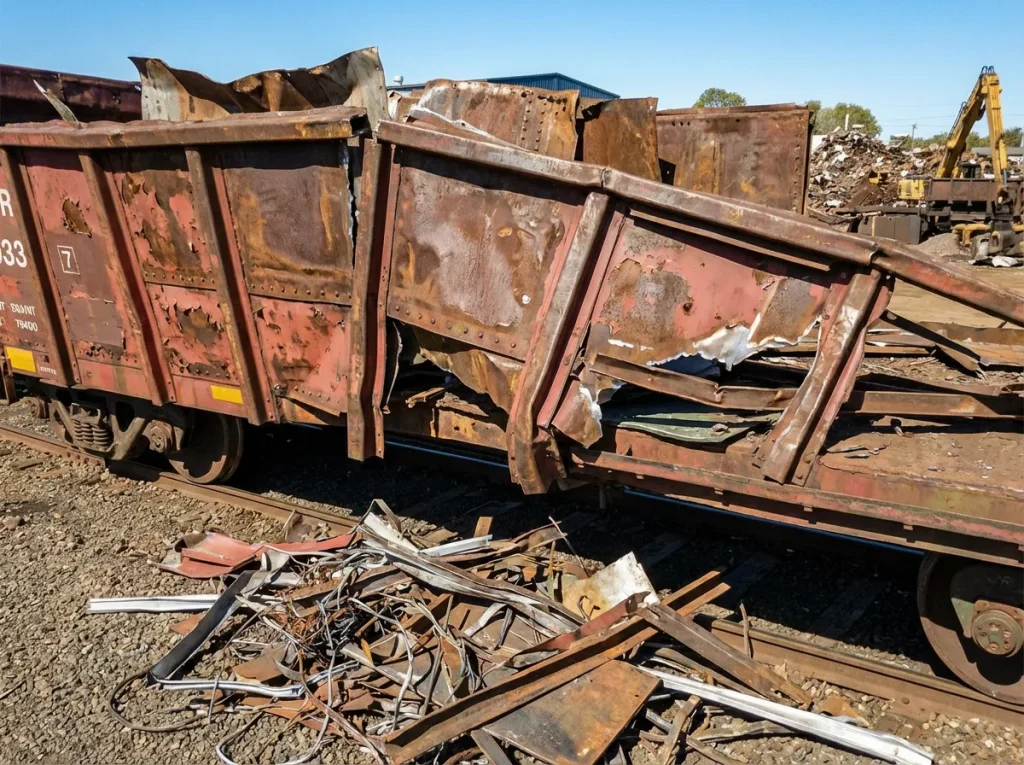
Every railcar eventually reaches end of life. Structural damage, regulatory changes, or simply age beyond economical repair. When that happens, retiring the car and recovering scrap value is the smartest financial move. CRMS coordinates full scrap processing, whether you need complete dismantling, material separation for maximum recovery, or straightforward scrap-to-recycler disposal.
We handle the entire process. Valuation based on current scrap market prices. Dismantling at our facilities or through trusted partners. Material recovery (steel, aluminum, brass, copper, wheels, trucks) separated and sold to maximize your return. Environmental compliance including HAZMAT residue handling and EPA requirements. You get transparent pricing, fast processing, and the best possible recovery value for retired equipment.
Complete Scrap Solutions
Transparent valuation based on current scrap steel, aluminum, brass, and copper market prices. We explain how pricing works, what affects recovery value, and what you can expect before processing begins.
Full tear down of end-of-life cars. Cutting, crushing, and separation of materials. Performed at CRMS facilities or through vetted partners with proper equipment and EPA compliance.
Steel frames, aluminum components, brass fittings, copper wiring, wheels, trucks, and other salvageable materials separated for maximum scrap value. Higher recovery value than bulk scrapping.
Serviceable components (valves, fittings, trucks, wheels, brake systems) can be refurbished and resold instead of scrapped. Adds value beyond raw material recovery when components are in good condition.
Proper handling of residual chemicals, oils, and hazardous materials before scrap processing. EPA compliant disposal and documentation. Prevents regulatory violations and environmental liability.
Retire entire fleets efficiently. Whether you're scrapping 5 cars or 50, we coordinate logistics, processing timelines, and payment to keep the operation moving without tying up your internal resources.
Why CRMS
We explain scrap valuation upfront. You know what you're getting paid before processing starts. No surprise deductions, no hidden fees, no opaque pricing formulas.
Separating steel, aluminum, brass, copper, and salvageable components delivers higher recovery value than bulk scrapping. We invest the effort to maximize your return.
Retired cars don't sit idle for months. We move quickly to dismantle, process, and settle payment. Your capital gets recovered and redeployed faster.
HAZMAT residue handling, proper disposal documentation, and environmental compliance built into every scrap job. Protects you from regulatory violations and liability.
CRMS facilities and partner sites provide processing capacity nationwide. Your retired fleet doesn't have to travel hundreds of miles to a single scrap yard.
We've been managing railcar lifecycles since 2001. We understand fleet economics, scrap market pricing, and how to get the best return on retired equipment.
Scrap when repair costs exceed 50% to 60% of the car's post-repair market value AND the car has fewer than 10 years of expected service life remaining. Consider regulatory compliance too—pre-DOT-117 tank cars restricted from certain commodities may be worth more as scrap than as non-compliant equipment.
A typical decision: If a 25-year-old tank car needs $40,000 in structural repairs but is only worth $70,000 after repair with 5 years of life left, scrapping and recovering $15,000 to $20,000 in material value makes better financial sense.
Scrap value is based on recoverable materials (steel, aluminum, brass, copper) priced per ton at current commodity market rates. Heavy steel typically runs $250 to $400 per ton. Specialty materials command premiums: aluminum $800 to $1,200/ton, brass $2,000 to $3,000/ton, copper $3,000 to $4,500/ton.
Prices swing 20% to 40% annually based on global steel demand, domestic mill production levels, and scrap supply. A 40-ton tank car yields $12,000 to $18,000 at $300/ton steel or $15,000 to $22,000 at $400/ton. Timing fleet retirements during strong scrap markets maximizes recovery.
Bulk scrapping crushes cars as-is with minimal disassembly. All materials go into one mixed stream sold at the lowest rate (typically $250 to $350/ton for total car weight). A 40-ton car yields $10,000 to $14,000.
Material separation dismantles cars systematically, sorting steel, aluminum, brass, copper, and salvageable components into separate streams sold at individual market prices. The same 40-ton car yields $15,000 to $22,000—20% to 50% higher recovery. Separation takes 2 to 4 weeks longer but delivers significantly better returns for most railcar retirements.
EPA Resource Conservation and Recovery Act (RCRA) governs hazardous waste disposal if cars carried HAZMAT and have residual contamination. Cars must be cleaned or treated as hazardous waste during processing. Clean Air Act and Clean Water Act regulate emissions from cutting operations and runoff from scrap yards.
Car owners must disclose previous commodities, especially HAZMAT. Regulated components (PCBs, asbestos, lead paint, refrigerants) require proper removal and disposal through licensed facilities. Processors must maintain disposal documentation. Failure to disclose contamination creates shared liability between owner and processor for cleanup costs and penalties.
Yes. Serviceable components (valves, fittings, trucks, wheels, brake systems) can be refurbished and resold if they're in good condition and meet current AAR standards. This adds value beyond raw material recovery.
Component resale works best for newer cars retired early due to fleet transitions or regulatory changes. Older cars with worn components typically yield better returns through material separation than component salvage. Evaluate component condition during initial inspection to determine the best approach.
Scrap processing timelines depend on the approach. Bulk scrapping can be completed in 1 to 2 weeks from delivery to payment. Material separation takes 3 to 4 weeks due to systematic dismantling and sorting of steel, aluminum, brass, copper, and salvageable components.
Fleet retirements of 10+ cars can take 6 to 8 weeks for complete processing. Payment timing varies by processor—some pay upon delivery, others pay after material is sold to mills and smelters. Professional processors provide transparent valuation upfront and clear payment schedules before work begins.
“We had 18 tank cars that were damaged beyond economical repair. CRMS provided transparent scrap valuation, coordinated full dismantling, and recovered materials separately to maximize our return. We netted 40% more than the bulk scrap quotes we got elsewhere.”
“CRMS handled the entire fleet retirement including HAZMAT residue cleanup and EPA documentation. We got full transparency on scrap pricing, fast processing timelines, and payment within two weeks of completion. The whole process was straightforward.”
Direct Coordination
Tell us what you're scrapping and we'll provide transparent valuation and processing options within 24 hours.
Need to talk first?
Quick 15-minute call to align scope and next steps before final quote.
Book a Discovery Call